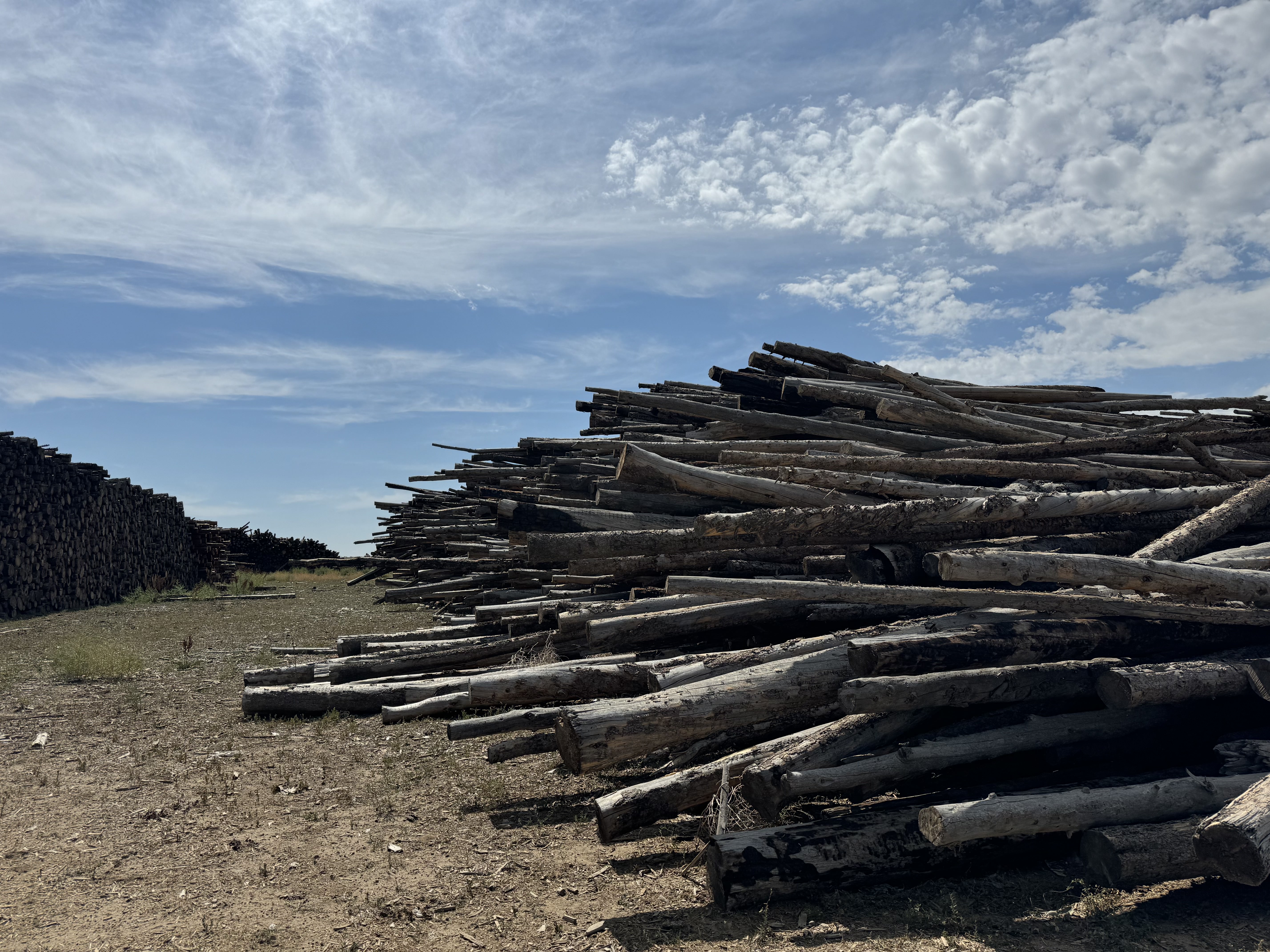
The safety and success of biomass carbon removal and storage (BiCRS) is often context dependent.
Building pathways and markets for biomass utilization and storage is an essential step toward enabling forest management at scale in the US West and other regions of the world. But no single approach works everywhere. Each one carries its own scientific and technical requirements, and those requirements depend on the biomass itself and on the place where the work happens. For one approach, variables such as depth to groundwater, soil characteristics, and climate can govern how durable storage is. For others, the key suite of variables may be completely different. A pathway that performs well in one county can fail 100 miles away for reasons that have nothing to do with the technology.
That is a lot of context for any individual to integrate for decision making. Our recent analysis identified where conditions across 11 Western states favor biomass burial. We took the model outputs from this publication and built them into an interactive tool so users can investigate the suitability of this approach in their own backyard.
We hope it is useful to land managers weighing what to do with residues from a fuels treatment, to project developers screening sites before committing to field work, to agency and tribal resource staff evaluating proposals that cross their desks, and to funders and policymakers trying to understand why the same intervention gets different results in different places. It is a screening tool. It is meant to narrow the field and sharpen the questions you bring to a site, not to replace site-level assessment.
Embedded below is a first iteration of the Biomass Decision Support (BiDS) Tool. It allows the user to overlay burial depth estimates with estimates of biomass residues to be generated in each county, wildfire hazard potential, USFS priority thinning locations, and finally, projected locations for bioenergy with carbon capture and storage, as modeled by the Biofuel Infrastructure, Logistics, and Transportation (BILT) model. It also allows a user to investigate particular county-level opportunities, or assess the best biomass burial site for a given location--and compares this to the nearest projected BECCS facility. Please see the tutorial for additional information.
For a direct link to the interactive tool, please visit: carboncontainmentlab.github.io/biomass-burial-website/.
We are expanding the tool to keep pace with a fast-moving field.
This first version of BiDS gave burial the most detailed, mechanistically informed treatment. But a fair comparison across pathways means giving biochar, BECCS, bio-oil injection, and other options that same level of investigation and scrutiny, not just a single average carbon efficiency and cost ranges standing in for what are actually complex, variable processes in their own right. Just as burial's performance depends on cover thickness, soil type, and local water balance, other pathways have their own site-specific drivers, biochar's yield and stability depend on feedstock and pyrolysis conditions, BECCS depends on facility proximity and capture efficiency, and different burial configurations (varying depth, cover design, or engineered barriers) can perform very differently even within the same broad "burial" category. Building out this same depth of modeling for each pathway is our next major phase of work.
A tool like this is only as useful as its ability to keep up with a rapidly evolving landscape of storage and utilization approaches, so this expansion isn't a one-time update. As new pathways emerge and mature, and as our understanding of existing ones deepens, we plan to continue building them into the tool so that users are comparing against the full range of viable options. We also plan to extend the comparison beyond carbon alone, incorporating additional impact factors, like water use efficiency, PM2.5 emissions, and other air quality outcomes, so that site-level decisions can account for the full range of benefits and tradeoffs, including the public health stakes that matter most to the communities near these treatments.
To collaborate on expansions or usage of the BiDS Tool, please contact Sinead Crotty at sinead.crotty@cclab.org.